
What is a loan without direct deposit with no credit?
A loan without direct deposit with no credit is a short-term or installment loan where the lender sends the approved funds straight into your bank account. While every bank and lender has different requirements, some products are designed so you can get a loan without a traditional credit check.
No credit in this context usually means the lender does not rely heavily — or at all — on your credit bureau record (FICO or similar) when deciding approval. Instead, lenders evaluate alternative signals that demonstrate your ability to repay: an active bank account history, steady employment, proof of regular income, and identity and residency verification.
These loans are offered online and are intended to give quick access to cash for people who lack a lengthy credit history, have thin credit files, or have poor credit records. They fill a real gap: students, young adults, new immigrants, gig workers, and others who have trouble getting a traditional bank loan can sometimes qualify for these direct-deposit, no-credit options.

How these products work in practice
where to apply for a loan with direct deposit online?
You submit a fast online application, upload ID and proof of income or link your bank account, and, if approved, the lender deposits funds directly into your checking account, often within 24–48 hours.
The lender bases approval on bank account activity, payroll deposits, employment documentation, or alternative verification rather than a hard credit pull. Repayment terms vary for payday-style products, expect repayment on the next paycheck (two to four weeks), while installment no-credit loans spread payments over several months (commonly 3–24 months) with fixed monthly payments.
Because underwriting is different from traditional loans, APRs are typically much higher than bank or credit union loans. That trade-off — speed and accessibility versus cost — is the defining characteristic of direct deposit personal loans with no credit.
Key features of loan without direct deposit with no credit
• High interest rate (APR)
Because the lender assumes more risk without a standard credit check, APRs can be very high; ranges vary widely depending on product type (payday vs. installment) and lender. Installment no-credit loans usually charge less than payday loans but remain far above bank rates. Expect to see APRs that can range from very high double digits to several hundred percent for the riskiest short-term products.
• Accessibility
These loans are intentionally accessible. They are designed for customers who cannot access traditional credit: students, new immigrants, recent graduates, self-employed individuals with fluctuating income, and people recovering from credit setbacks.
• No credit check
Many lenders advertise “no credit check” or “soft credit check.” In practice this means they either skip a hard bureau pull or use a soft inquiry that does not affect your score, or they focus on bank-account and income signals instead of the credit report.
• Typical loan amounts
Amounts are usually small to mid-range: often $100–$5,000. Payday-style loans are on the lower end ($100–$1,000), while installment no-credit products can reach $2,000–$5,000 or slightly more.
• Direct deposit funding
Funds are wired straight into your bank account. This is faster and safer than cash pickups or mailed checks. Many lenders advertise same-day or next-business-day funding when you apply early.
• Repayment terms
Repayments may be due on your next payday (very short-term) or spread over several months with fixed monthly payments. Installment loans generally offer longer terms (3–24 months) which lower monthly cost but increase total interest paid.
• Fast and easy applications
Online applications take minutes. Lenders typically ask for ID, proof of income (pay stubs, bank statements), and bank-account verification. Many provide instant pre-approval and rapid decision-making.
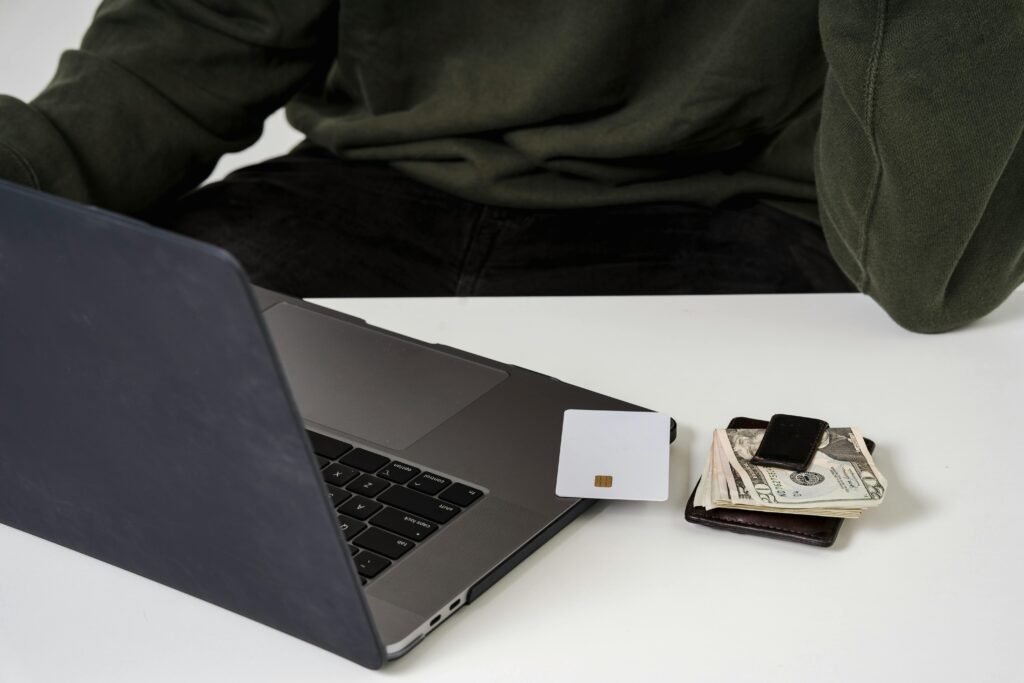
Is it possible to get a personal loan without direct deposit?
Yes, it is possible, but the options are limited and come with trade-offs. Most traditional banks and credit unions require a credit check (a hard pull) and use FICO or similar scores to set rates. Lenders that offer no-credit-check loans rely on other signals — like bank account history and steady deposit patterns — or they require collateral or a co-signer.
Typical pathways include linking a checking account with steady deposits, providing evidence of consistent income, using a co-signer or guarantor with good credit, supplying collateral (title, savings), or applying to niche lenders and online platforms that accept alternative underwriting.
Why lenders offer no-credit-check products: they want to serve a market that traditional credit ignores. They price risk differently and build underwriting models around cash flow and bank-transaction history. But be cautious: some no-credit options are predatory.
They carry high fees and sky-high APRs that can trap borrowers in a debt cycle. Always verify terms, confirm whether payments will be reported to credit bureaus, and weigh alternatives before signing.
How to get a loans without direct deposit with no credit
- Explore the right loan options. Look for products suited to your situation: credit union membership loans, credit-builder loans, secured loans (like savings-secured), co-signed loans, or reputable online lenders that offer bank-account-based underwriting.
- Credit unions and community lenders often provide more favorable terms than payday shops. Credit-builder loans and small secured loans can help you build a history with lower costs. If you must use an online no-credit product, compare APRs, fees, and repayment options closely.
- Build credit history for the future
Even if you need cash now, start building a credit record for better options later. On-time payments on any reported installment loan or secured credit product help establish a tradeline. Secured credit cards and credit-builder loans reported to bureaus are effective ways to create a positive file within 6–12 months. - Apply strategically
Apply for the amount you actually need, not the maximum available. Submit applications to lenders that use soft inquiries first to check preapproval. Provide clear proof of steady income, recent pay stubs, or regular bank deposits to strengthen your case. Avoid applying to many lenders at once, which can look risky if any require hard pulls. - Check your current financial situation
Gather pay stubs, bank statements, proof of identity (ID, driver’s license), and documentation of regular income (invoices for freelancers, payroll reports). Be realistic about your debt-to-income ratio: lenders consider monthly debt obligations when assessing whether you can repay. - Compare all terms carefully
Check APR, origination fees, late fees, prepayment penalties, rollover rules, and full repayment schedules. Avoid loans with APRs well above what you can reasonably handle, and be particularly cautious of products with aggressive rollover or hidden penalty structures. If the APR exceeds SECURE/alternative interest caps in your area, seek another option.

Pros of online direct deposit personal loans with no credit
• Immediate relief in emergencies
Fast direct deposits can bridge urgent gaps: emergency medical bills, urgent car repairs, or avoiding eviction. For short-term crises, speed is the primary advantage.
• Simplicity
These loans require minimal paperwork and fewer hoops than traditional loans. That makes them useful when speed matters and documentation is limited.
• Accessibility for people with little or no credit history
If you’re newly independent, recently immigrated, a young adult, or recovering from credit challenges, these options may be accessible when banks won’t lend.
• Fast application and funding
Many lenders offer online decisioning and same-day or next-day funding.
• Opportunity to improve financial reputation
If a lender reports timely payments to credit bureaus, making on-time payments can help build a credit profile over time.
Cons of loans without direct deposit with no credit
• Limited loan offers and small amounts
Because of risk, lenders often cap amounts, so they may fall short for large, one-time needs.
• Very high rates and fees
APRs often far exceed bank loans. Fees may include origination charges, processing costs, late fees, and rollover fees in some products.
• Risk of debt traps
Short terms and high fees can force repeated borrowing or rollovers, increasing the overall burden and trapping borrowers in cycles of debt.
• Short repayment terms for payday-style loans
Repayment on the next payday can be unrealistic for borrowers with tight cash flow and can lead to repeated rollovers.
• Higher total cost of borrowing
Even when monthly payments seem manageable, the total interest and fees over the loan life are often much higher than alternative financing.
• Damage to financial standing if payments are missed
If a lender reports missed payments, your credit can be harmed. If payments are auto-debited and your account lacks funds, bounced-payment fees compound the problem.
Practical examples and scenarios
• If you need emergency funds for a sudden car repair and you have limited credit history but a stable deposit pattern into your checking account, a direct deposit no-credit installment product may provide enough to fix the vehicle and let you keep working — but check term length: a 3–6 month installment plan may be less risky than a two-week payday loan.
• If you are a young adult with unpredictable freelance income and no credit record, a savings-secured small loan or a credit-builder product from a credit union is often a better long-term strategy than repeatedly using high-cost no-credit online loans. Use the no-credit option only as a last resort.
• If your bank account shows regular deposits and no overdrafts, some direct-deposit lenders will approve you more readily. Still, verify whether payments will be reported to credit bureaus to ensure you can use the loan to build credit instead of merely servicing short-term needs.

Red flags and safety checklist of loans without direct deposit
• Extraordinarily high APR: If the APR is in the triple digits for an installment loan, read the fine print and compare alternatives. High APRs are not always illegal, but they are costly.
• Opaque fees: Origination, processing, rollover, and prepayment penalties must be clearly disclosed. If they are not obvious, walk away.
• Aggressive rollovers or automatic renewals: Loans that automatically roll into new loans or require repeated short-term renewals are risky and can create a debt spiral.
• Unclear dispute or complaint process: Legitimate lenders provide customer service, clear documentation, and a route to dispute charges. If contact details are sketchy, that’s a warning sign.
• No license or local registration: Work only with licensed lenders operating in your jurisdiction. Unlicensed lenders and unscrupulous platforms are common in the no-credit space.
Alternatives to direct deposit no-credit loans
Credit union small loans: Often more affordable if you can join. They can use alternative, e.g. loans repaid through payroll direct deposit , underwriting, and have community-oriented terms.
Credit-builder loans: Structured to build credit while requiring small monthly payments that are reported to credit bureaus.
Secured loans: Use savings, CDs, or other collateral to secure better terms.
Co-signer loans: Ask a trusted family member or friend with good credit to co-sign, which lowers rates.
Negotiation and contingency planning: Contact creditors to arrange hardship plans or payment extensions before borrowing at high rates.
Final recommendations and practical advice
- Compare APRs and full cost, not just monthly payment: A low monthly payment stretched over a long term can hide a much higher total cost.
- Use loan calculators: Estimate total repayments to see whether the loan is affordable and cost-effective compared with alternatives.
- Limit use to true emergencies: Because of cost and rollover risk, view these products as emergency stopgaps, not part of a regular financing plan.
- Document everything: Keep copies of the loan agreement, repayment schedule, and records of payments to protect yourself in case of disputes.
- Plan to build credit: If you use a direct-deposit no-credit loan, follow up with credit-building steps (secured card, credit-builder loan) to access better rates later.

Conclusion
Online direct deposit personal loans with no credit offer fast, accessible cash for people who cannot qualify for traditional bank loans. They serve an important purpose for emergencies and for applicants with thin credit files. But that convenience comes at a high cost: steep APRs, fees, short terms, and a substantial risk of falling into a debt cycle. Payday loan no direct deposit is also beneficial.
Use these products only when necessary, shop carefully, compare full costs, and prioritize building a credit history so you can rely on safer, lower-cost financing in the future. If used with caution and a clear repayment plan, a direct deposit personal loan with no credit can bridge an urgent gap — but the long-term goal should always be to move toward mainstream credit products with lower rates and clearer protections.